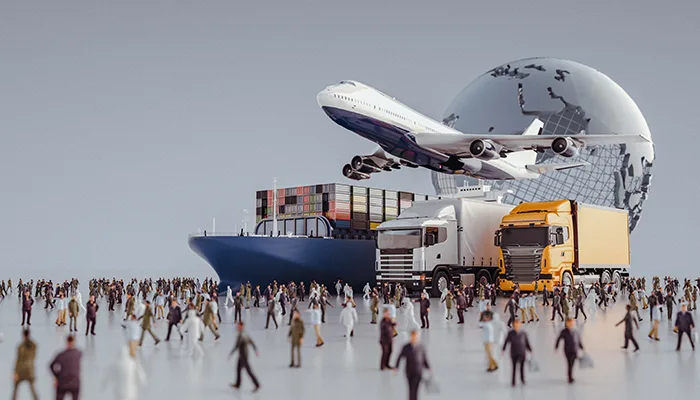


Air Transportation: Speed, Urgency, and Global Connectivity
Air transportation, considered a primary driving force in global trade for high value‑added goods and services, overcomes the constraint of time. It is the fastest method for moving goods and passengers over long distances, especially across geographical barriers such as oceans and mountain ranges.
Key Advantages: Speed and Accessibility
The absolute advantage of air transportation lies in its speed. For goods such as pharmaceuticals, advanced electronic components, or perishable agricultural products, even a delay of a few days in the supply chain can result in significant losses. Aircraft make it possible for cargo to move from one continent to another within a few hours or, at most, a single day. This urgency plays a crucial role in Just‑in‑Time (JIT) inventory management and reduces the need for large storage facilities.
In addition, air transportation offers high flexibility in terms of geographic coverage. Airports, as the hubs of this network, enable remote regions or countries with limited maritime or land access to connect to the global economy.
Challenges and Limitations
However, speed and accessibility come at a cost. High operating expenses—driven by fuel prices, specialized labor costs (pilots and air traffic controllers), and airport fees—make air transport the most expensive mode of transportation. As a result, it is generally reserved for lightweight, high‑value, or extremely urgent cargo.
From a capacity perspective, aircraft have a very limited carrying volume compared to large container ships. Moreover, this system is highly dependent on precise infrastructure, including control towers, advanced navigation equipment, and strict airport security. Any disruption in these elements can affect the entire network.
Future and Sustainability
The aviation industry is currently under increasing pressure to reduce its environmental impact. Research into Sustainable Aviation Fuel (SAF) and the design of more aerodynamic and fuel‑efficient aircraft is shaping the future of the sector, aiming to maintain global connectivity while aligning with climate commitments.
Conclusion
In summary, air transportation is a vital artery for businesses that depend on speed and freshness. As an essential complement to maritime and land transportation, it completes the global logistics network by enabling rapid and reliable international connections.