
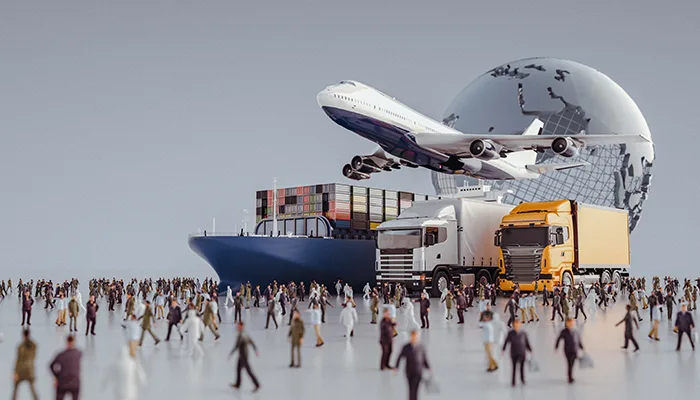
International transportation refers to the set of processes and systems used to move goods and passengers between different countries. This process is a fundamental component of the global supply chain and international trade; without it, economic and cultural exchanges on a global scale would be practically impossible. The main methods of international transportation include maritime, air, land (road), and rail transportation, each selected based on specific conditions.
1. Maritime Transportation
This is one of the oldest and most widely used methods of moving goods worldwide. More than 80 percent of global trade volume is carried by sea. Its main advantages are very high cargo capacity and lower costs compared to other modes of transportation. Major ports such as Singapore, Shanghai, and Rotterdam serve as key hubs in this network. However, long transit times and vulnerability to weather conditions are considered its main drawbacks.
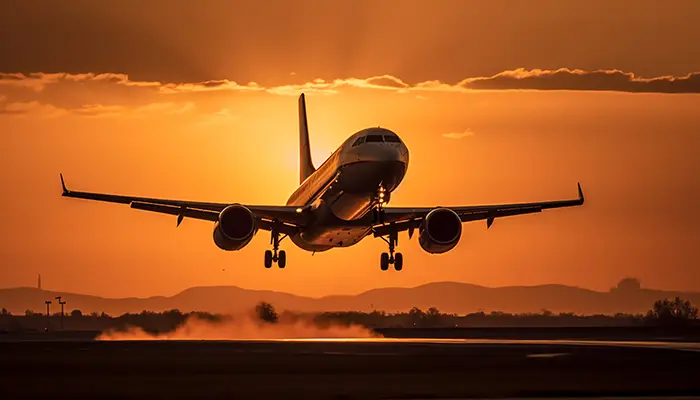
2. Air Transportation
Air transportation is the best option for moving high‑value, perishable, or urgent goods. High speed and strong security are its primary advantages. Nevertheless, high costs and limitations on cargo weight and volume make this method uneconomical for heavy shipments. Companies such as DHL and Emirates SkyCargo are among the leading players in this industry.
3. Land Transportation (Road)
Land transportation is especially important for countries that share land borders. Trucks and road transit enable the direct movement of goods from the factory door to the final destination. Moderate speed, high flexibility, and reasonable costs are its key strengths. On the other hand, traffic accidents, customs restrictions, and congestion are among its main challenges.
4. Rail Transportation
Rail transportation is one of the most reliable methods for moving heavy and bulk cargo. Low cost, stable scheduling, and reduced environmental pollution are its main advantages. Projects such as China’s “New Silk Road” are examples of international rail transport development that connects Asia to Europe. However, a lack of infrastructure in some countries limits the expansion of this method.
Conclusion
Choosing the appropriate international transportation method depends on various factors such as distance, type of cargo, budget, and required speed. In many cases, companies use a combination of methods, known as multimodal transportation. The future of this industry depends on digitalization, infrastructure improvement, and the adoption of clean technologies to reduce pollution and increase efficiency.