

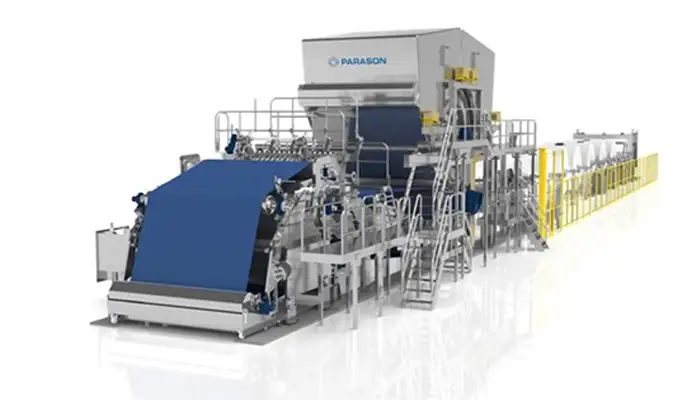
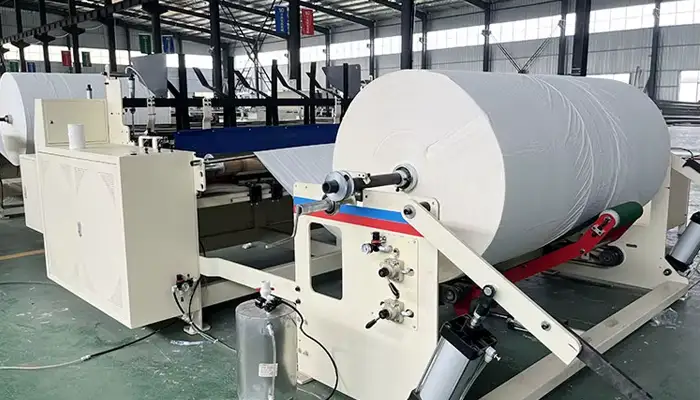
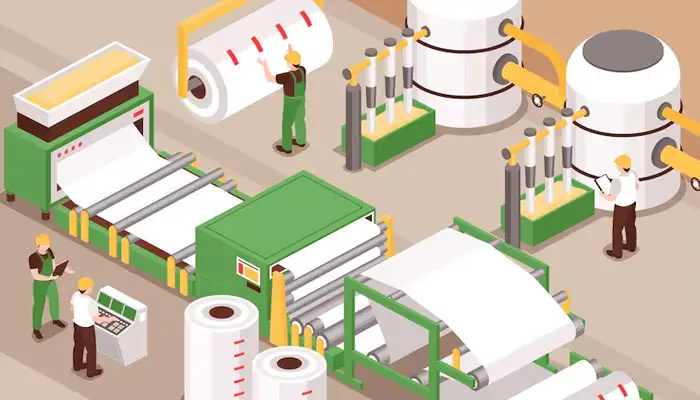

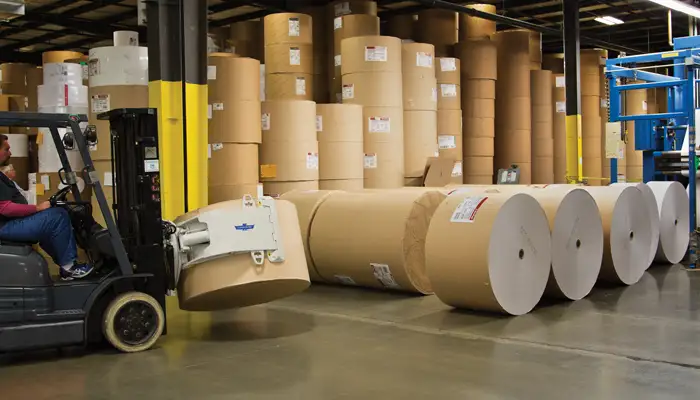

The paper industry is considered one of the main pillars of the country’s cultural and educational infrastructure. With the growth of domestic consumption of writing paper in Iran, the need for renovation and equipping production lines is felt more than ever. The project to import a complete roll paper production line from China can be a strategic step towards production self-sufficiency and reducing import dependence. This process can be described in five major executive stages.
Stage 1: Preliminary Studies and Selection of the Chinese Supplier
In the first step, the engineering group and commercial experts must determine the technical specifications of the required production line: daily production capacity, type of fibers consumed, machine speed, and type of dryer. Following this, reputable Chinese manufacturing companies are identified. Reviewing the production history, ISO certificates, export volume to other industrial countries, and visiting the manufacturer’s factory are critical parts of this stage. The result of these reviews is presented to senior project managers in the form of a feasibility report, allowing decisions to be made based on quality and cost criteria.
Stage 2: Contract Negotiation, Down Payment, and Currency Settlement
After selecting the supplier, the second stage involves commercial negotiations and formal contract drafting. The contract defines device specifications, total price, payment method, warranties, and delivery terms. For currency settlement, a Letter of Credit (L/C) or international bank transfer is usually used. Sometimes, a portion of the amount is paid as a down payment (10% to 30%) by mutual agreement, and subsequent installments are settled after loading and final delivery. At this stage, project financial management must closely monitor the exchange rate, transfer costs, and payment deadlines.
Stage 3: International Transportation and Import Customs Operations
In the third stage, the machinery is shipped from China’s industrial ports (such as Shanghai or Guangzhou) to Iran via container vessels. Upon the cargo’s arrival at Imam Khomeini Port or Bandar Abbas Port, the customs clearance process begins. Required documents include the bill of lading, commercial invoice, certificate of origin, packing list, and pre-shipment inspection certificate. Given that these industrial devices are categorized as capital goods, their customs tariff is generally lower than that of consumer goods. Concurrently, necessary coordination must be made with the Ministry of Industry, Mine and Trade (MIMT) and the Iranian National Standards Organization to approve the entry of the machinery.
Stage 4: Installation, Performance Testing, and Operator Training
After customs clearance, Chinese specialists or Iranian technical teams install the equipment at the factory site. The installation phase includes setting up foundations, connecting the fiber feed path, the drying unit, and calibrating the reeling/winding section. Performance tests are then conducted using actual raw materials to check the production output for surface quality, thickness, and uniformity. During this phase, the manufacturing team is obligated to train Iranian operators and engineers on the operation, maintenance, and repair of the production line.
Stage 5: Operation, Technical Warranty, and Production Optimization
Following successful installation, pilot production begins, and operational data is collected. Analyzing the test results helps optimize production parameters such as machine speed, energy consumption, and roll quality. The manufacturer usually provides a one-year warranty period for after-sales services. Subsequently, the production process enters a stable phase, and domestic cellulosic raw materials are gradually substituted for imported fibers to reduce the final cost.
Conclusion
The project to import a roll writing paper production line from China symbolizes constructive interaction between industry and global technologies. Its success requires multilateral cooperation among the technical, financial, transportation, and human resource training sectors. With precise and standardized execution, such a plan can be a significant step toward stabilizing the country’s paper industry and enhancing national productivity.
Supplementary Information (for Website Display):
Note: This website is solely a web design sample. All products, services, images, and prices displayed are illustrative, and no actual purchase or order capability is available.