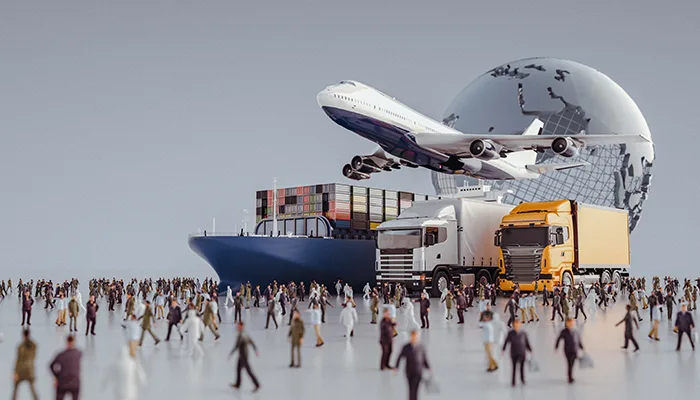


Maritime transportation is one of the most important methods of moving goods on a global scale and has played a fundamental role in the development of international trade for centuries. Since ancient times, seafaring has served as a means of connecting civilizations and exchanging valuable goods such as spices, gold, and silk. Even today, the majority of global trade—more than 80 percent—is carried out through seas and ports.
The most prominent feature of maritime transport is its high capacity for moving large volumes of cargo and its cost‑effectiveness compared to other methods such as air or land transportation. Large cargo vessels are capable of carrying thousands of containers simultaneously, which significantly reduces the per‑unit cost of goods in international trade. For this reason, coastal countries typically make substantial investments in the development of their ports and shipping fleets.
From an economic perspective, maritime transportation plays a key role in the growth of exports and imports. Ports function as vital hubs of global trade, and countries with access to well‑equipped ports and advanced shipping lines enjoy a significant competitive advantage. For example, major ports such as Shanghai, Rotterdam, and Singapore are considered leading global logistics centers, handling millions of tons of cargo each year.
From an environmental standpoint, although maritime transport is relatively more energy‑efficient than other modes of transportation, it still faces challenges such as water pollution, greenhouse gas emissions, and maritime accidents, all of which can cause irreversible damage to marine ecosystems. As a result, the International Maritime Organization (IMO) has introduced regulations aimed at reducing pollutants and improving energy efficiency in ships. The use of low‑sulfur fuels, electric vessels, and renewable energy sources are among the modern solutions in this field.
In terms of technology, the shipping industry has witnessed remarkable advancements. Today, many vessels are equipped with intelligent systems, autonomous navigation, and remote‑control technologies, which enhance safety and reduce human‑related costs. In addition, the Internet of Things (IoT) and big data play an important role in route management and vessel scheduling.
Ultimately, maritime transportation is considered the backbone of the global economy. Without it, international supply chains and multilateral trade would be effectively disrupted. Despite environmental challenges and the need for technological modernization, the future of this industry is moving toward greater sustainability, digitalization, and intelligent operations.